About SIGMA


The SIGMA (Spectral Infrared Generation, Modeling and Analysis) radiative transfer model is a monochromatic, 1-D fast code for calculating the Earth spectrum in the infrared and related Jacobian matrices. SIGMA is the latest evolution of a long heritage of parametric and monochromatic codes developed at University of Basilicata since the early 2000s, and it is indeed the newly advanced version of the σ-IASI model, conceived and first published in 2002 (see references below).
Being a parametric model that allows to compute analytical derivatives of radiance with respect to any surface and atmospheric input parameter, the model is particularly suitable to be used in data analysis and retrievals based on Optimal Estimation or any analytical minimization procedure. The main novel features of SIGMA are:

  • a modern, free user-friendly GUI that makes the model truly accessible by non-experts, effortlessly;
  • calculation of Earth-emitted + solar component radiances in the spectral interval 10-2760 cm-1;
  • capability to work in three different observation geometries: nadir, zenith and Sun-looking from surface;
  • a solar calculator that allows to compute solar angles given date and location;
  • a flexible configuration that allows to easily specify input species, aerosols, and surface properties;
  • an advanced treatment of scattering effects in the IR through physically-based scaling approaches;
  • 40+ different instrumental response functions to easily simulate IR channels, and a customizable instrument template;
The concept behind the creation of SIGMA is the need in the community of Earth science and observation for modern, accurate and accessible tools for first-hand data analysis. SIGMA is in this sense largely inspired to the NASA Planetary Spectrum Generator, which has been online since 2016 and is one of the most widely used radiative transfer tools worldwide. Being uniquely specialized on Earth science, SIGMA brings the same user experience to Earth radiative transfer modeling and data analysis, and is distinguished by the capability of dealing with plenty of specific Earth-observing instruments and platforms, and of producing radiances and Jacobians ready-to-use for retrievals, making SIGMA the best modeling choice to work with IR Earth observation data.


The SIGMA people  

The development, update and maintenance of SIGMA is entirely done by a consortium made by the Applied Spectroscopy groups of University of Basilicata, based at the Department of Engineering, and the University of Bologna at the Department of Physics and Astronomy "Augusto Righi". The model development and key upgrades are also done with the invaluable collaboration of selected team members from the CNR-IMAA in Potenza. SIGMA is entirely maintained through the time and resources of volunteers, and the physics of the model is developed within projects funded by the Italian Space Agency (ASI).
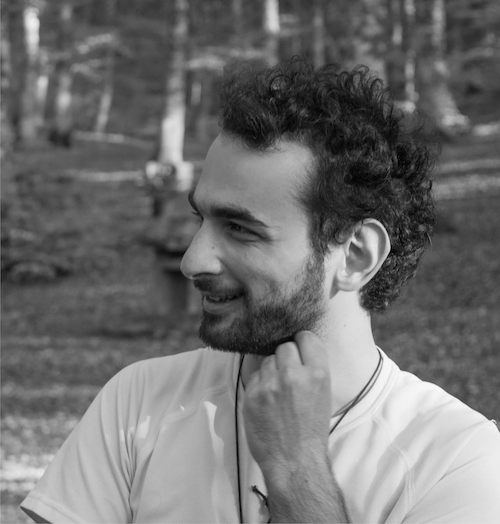
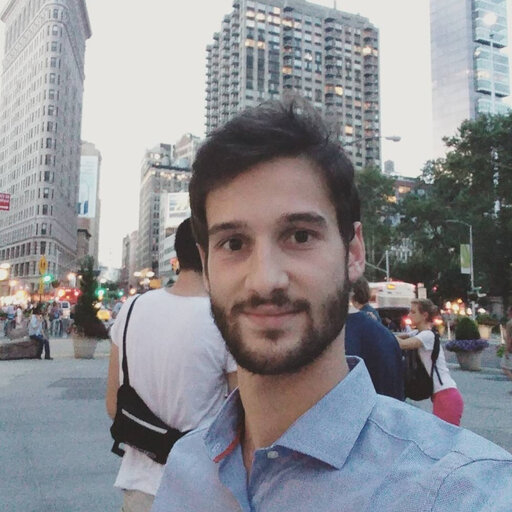
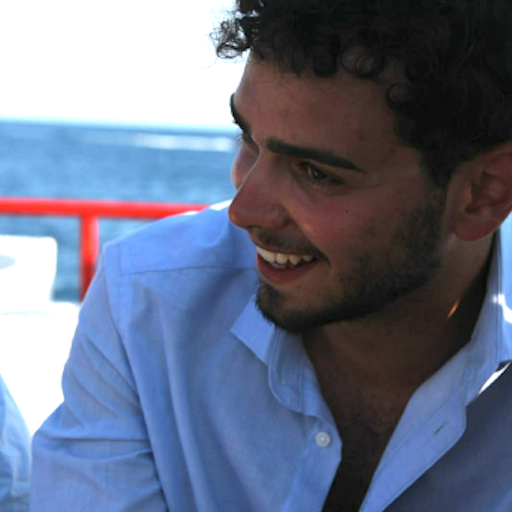
Dr. Giuliano Liuzzi (UNIBAS)
He is the creator of the modern interface for SIGMA, which was first conceptualized in 2023, and developed until the first version was published online in 2025. Giuliano completed his Ph.D. studies at University of Basilicata in 2016, under the supervision of Prof. Guido Masiello and Prof. Carmine Serio, who are the "fathers" of σ-IASI and derived models. After that he worked at NASA GSFC between 2017 and 2022 under the supervision of Dr. Geronimo Villanueva, who is the creator of PSG. This tool inspired Giuliano to create the web interface for SIGMA and modernize the existing codes at University of Basilicata, where he is now a tenure track researcher.

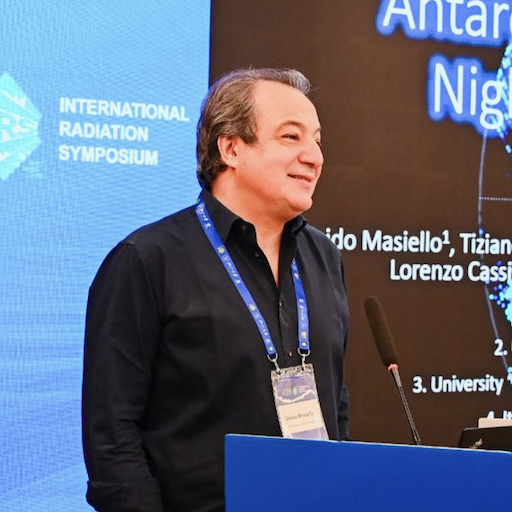
Prof. Guido Masiello (UNIBAS)
He founded the σ-IASI model in 2002 and drives the development of radiative transfer physics

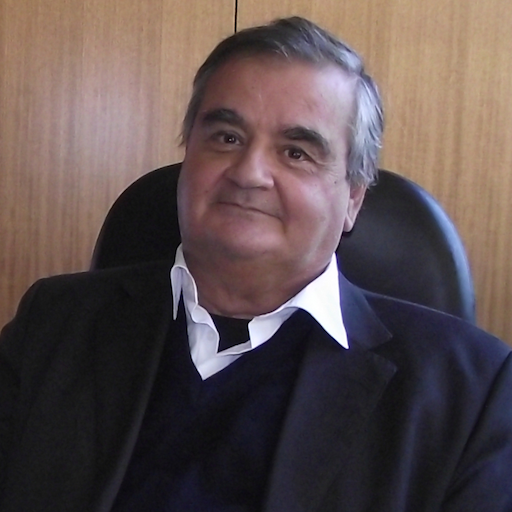
Prof. Carmine Serio (UNIBAS)
He founded the σ-IASI model in 2002 and drives the development of inversion and applications

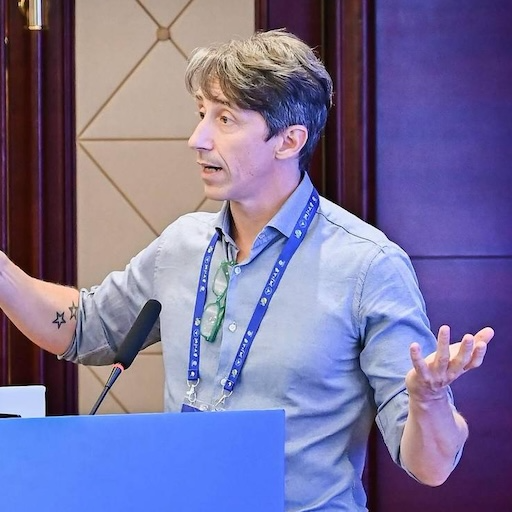
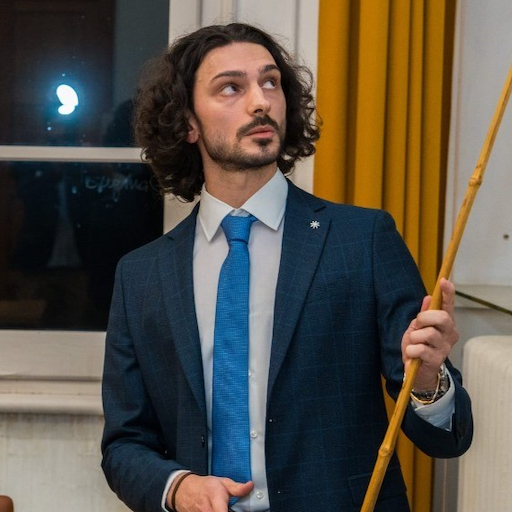
Prof. Tiziano Maestri (UNIBO)
He leads the development of aerosol scattering physics in the model and its applications

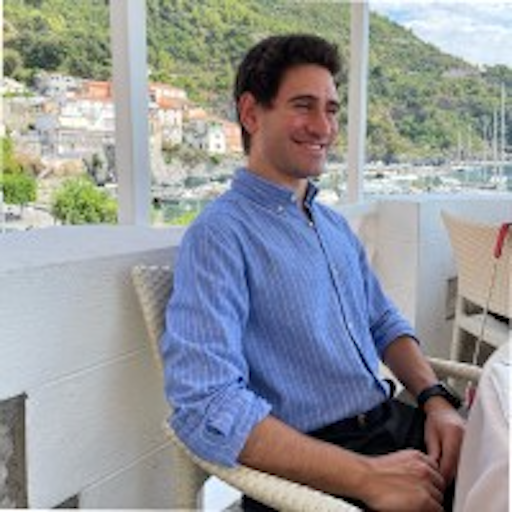
Dr. Michele Martinazzo (UNIBO)
He leads the development of aerosol scattering algorithms and works on model efficiency

Dr. Emilio Lapenna (CNR-IMAA)
He drives the development and update of all the security and usability features of the web GUI
 
Other contributions

Dr. Lorenzo Cassini (UNIBAS)
Works on new physics implementations

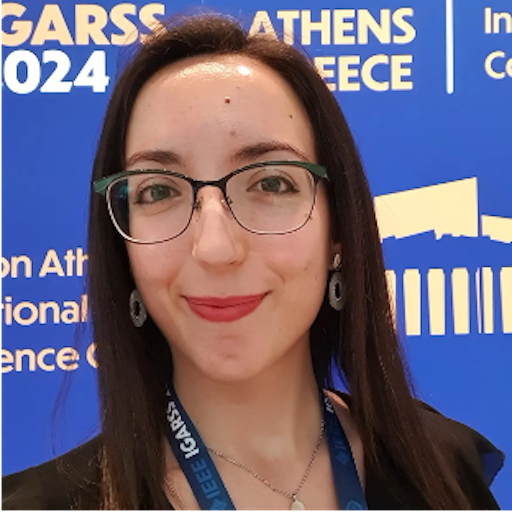
Dr.ssa Pamela Pasquariello (UNIBAS)
Expands the instrument ISRF database

Dr. Marco D'Emilio (UNIBAS)
Gives feedback about the GUI and its usability

Dr. Rocco Giosa (UNIBAS)
Updates underlying databases and applications

Dr. Federico Donat (UNIBAS)
Checks the operability of SIGMA and its features

Dr.ssa Sara Venafra (ASI)
Co-created σ-IASI and previous versions

Dr.ssa Italia De Feis (CNR-IAC)
Collaborates on retrieval procedures with SIGMA

Dr. Fabio Della Rocca (CNR-IAC)
Contributes to the SIGMA GUI improvement


References and literature

The development of SIGMA is the result of a 25-year long story of dedicated research, a story made of commitment, care, and most importantly, competences. We decided to finally make these competences as widely available to the public as possible, and to make our most valued tool usable by everyone for their research, education and training purposes, freely. While we are committed to keep it this way, we kindly ask the users of SIGMA to cite the following publications in their work that uses SIGMA as a tool.
2024
Foundational paper
Guido Masiello, Carmine Serio, Tiziano Maestri, Michele Martinazzo, Fabrizio Masin, Giuliano Liuzzi, Sara Venafra
"The new σ-IASI code for all sky radiative transfer calculations in the spectral range 10 to 2760 cm-1: σ-IASI/F2N"
Journal of Quantitative Spectroscopy and Radiative Transfer, Volume 312, January 2024, 108814

2024
Retrieval paper
Carmine Serio, Guido Masiello, Giuliano Liuzzi, Angela Cersosimo, Tiziano Maestri, Michele Martinazzo, Fabrizio Masin, Giorgia Proietti Pelliccia, Sara Venafra, Claude Camy-Peyret
"Demonstration of a physical inversion scheme for all-sky, day-night IASI observations and application to the analysis of the onset of the Antarctica ozone hole: Assessment of retrievals and consistency of forward modeling"
Journal of Quantitative Spectroscopy and Radiative Transfer, Volume 329, September 2024, 109211

2021
Clouds modeling paper
Michele Martinazzo, Davide Magurno, William Cossich, Carmine Serio, Guido Masiello, Tiziano Maestri
"Assessment of the accuracy of scaling methods for radiance simulations at far and mid infrared wavelengths"
Journal of Quantitative Spectroscopy and Radiative Transfer, Volume 271, September 2021, 107739

2016
Retrieval paper
Giuliano Liuzzi, Guido Masiello, Carmine Serio, Sara Venafra, Claude Camy-Peyret
"Physical inversion of the full IASI spectra: Assessment of atmospheric parameters retrievals, consistency of spectroscopy and forward modelling"
Journal of Quantitative Spectroscopy and Radiative Transfer, Volume 182, October 2016, pp.128-157
2002
First σ-IASI paper
Umberto Amato, Guido Masiello, Carmine Serio, Mariassunta Viggiano
"The σ-IASI code for the calculation of infrared atmospheric radiance and its derivatives"
Environmental Modeling and Software, Volume 17 (7), November 2002, pp.651-667